Driveways Built to Drain and Last
Gravel Driveway Installation & Repair in Waurika for rural properties where drives rut out and hold water in wheel tracks
Acreage and older rural homesites around Duncan and Blanchard are often reached by a long gravel drive off a county road, and a drive built as just a pile of rock on dirt rutts out quickly and holds water in the low wheel tracks. HX2 Forestry Mulching & Land Clearing Oklahoma installs and repairs gravel driveways on rural properties across Waurika, grading the base, hauling in the rock with its own semi and belly dump trailer, and shaping the drive so water sheds off it instead of pooling. The crew is owner-operated and uses its own equipment—dozer, skid steers, and hauling rig—to handle every stage of the work without splitting the job between contractors.
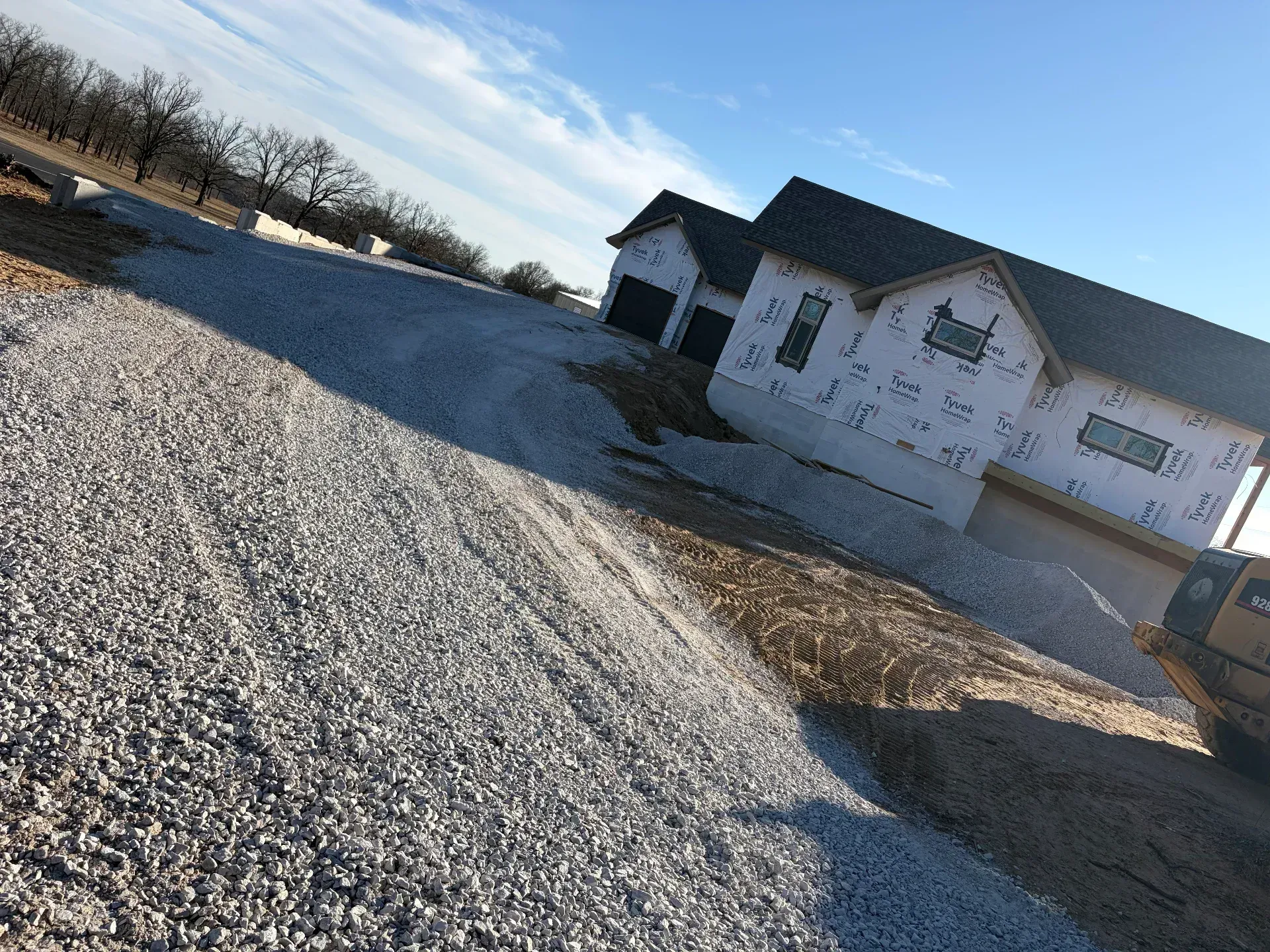
The existing surface is stripped or scarified to remove ruts and failed material, and the subgrade is shaped with a crown and ditches so water drains off the drive rather than running down the center. Base rock is spread and compacted in layers, and a topper of finer gravel is placed on top to create a surface that resists washboarding and erosion. Hauling in rock by belly dump is part of the job, and the crew moves material directly from the quarry to the property without third-party coordination.
Request a detailed estimate that specifies whether the quote includes removing old base and how much rock tonnage is covered in the price.
What Proper Gravel Driveway Installation Requires
A gravel drive that drains and holds up under traffic starts with a properly shaped subgrade, not just rock piled on top of the existing dirt. The dozer or skid steer crowns the center of the drive so water runs off to the edges, and shallow ditches are cut along the sides to carry that runoff away rather than letting it soak back into the base. Base rock is spread in lifts and compacted before the next layer goes down, a step that prevents voids and rutting that develop when loose stone is simply dumped and driven on.
After the drive is shaped and compacted, the surface sheds rainwater instead of holding puddles in the wheel tracks, vehicles no longer sink into soft spots or ruts, and the topper gravel resists washboarding that would otherwise roughen the drive within weeks of installation. The edges drain cleanly into the side ditches, and the crown holds its shape under repeated traffic.
The work includes stripping or scarifying the old surface, shaping the subgrade with crown and side ditches, spreading and compacting base rock in layers, and placing a finer topper gravel on the finished surface. Hauling rock to the site is handled with the crew's semi and belly dump trailer, and the quote should clarify whether removal of failed base and the total rock tonnage are included in the price.
Questions Before Starting Your Project
Property owners installing or repairing a rural gravel drive often ask about how the base is prepared and what keeps the drive from failing again.
Why does a gravel drive need a crowned subgrade?
The crown forces water to run off the drive toward the ditches instead of ponding in the center or wheel tracks, and without that shape water soaks into the base and softens it, leading to ruts and potholes that worsen with every rain and every vehicle pass.
What does scarifying the old surface accomplish?
Scarifying breaks up compacted dirt and failed rock so the new base bonds to the subgrade instead of sliding over a slick layer, and it allows the dozer or skid steer to reshape the profile with a consistent crown before fresh rock is added.
Why is base rock compacted in layers instead of all at once?
Compacting each lift forces the stone into a dense, load-bearing mat that resists rutting, and dumping all the rock at once leaves voids that collapse under vehicle weight, creating the same ruts and soft spots that existed before the drive was repaired.
What is topper gravel and why is it placed on top of base rock?
Topper is finer gravel that fills surface voids and creates a smooth driving surface, and it binds together under traffic to resist the washboarding and loose stone scatter that roughens drives built from base rock alone.
What will you notice once the gravel drive is installed?
The surface sheds water instead of holding puddles, vehicles drive smoothly without sinking into ruts or soft spots, and the crown and side ditches keep the base dry and firm even after heavy rain, conditions typical of rural driveways around Duncan and Blanchard that are built with proper subgrade preparation and layered, compacted rock.
HX2 Forestry Mulching & Land Clearing Oklahoma also installs and repairs gravel driveways in Duncan, Chickasha, Comanche, Wichita Falls, and Lawton. Ask whether the quote includes removing old base and how much rock tonnage is covered, and confirm that the crew will grade the subgrade with a crown and ditches before rock is delivered.