Sites Shaped to Drain Before Building Begins
Land Grading & Site Preparation in Waurika for rural building lots where the existing ground needs to be cleared, cut and filled to a level, draining grade
Rural building lots and older homesites being prepared for new construction around Comanche and Wichita Falls rarely have level, draining ground, and the existing surface often slopes the wrong direction or holds water in low spots. The ground needs to be cleared, cut and filled to a level, draining grade before anything is built on it, or the foundation will settle unevenly and runoff will pool around the building. HX2 Forestry Mulching & Land Clearing grades and prepares sites in and around Waurika, shaping ground to a set grade before a building, drive or pad goes in, serving Duncan, Chickasha, Comanche, Lawton, Blanchard, Wichita Falls and Bowie. The owner-operated crew uses its own dozer, excavator and skid steers, handling the work from clearing through final grading on the same job.
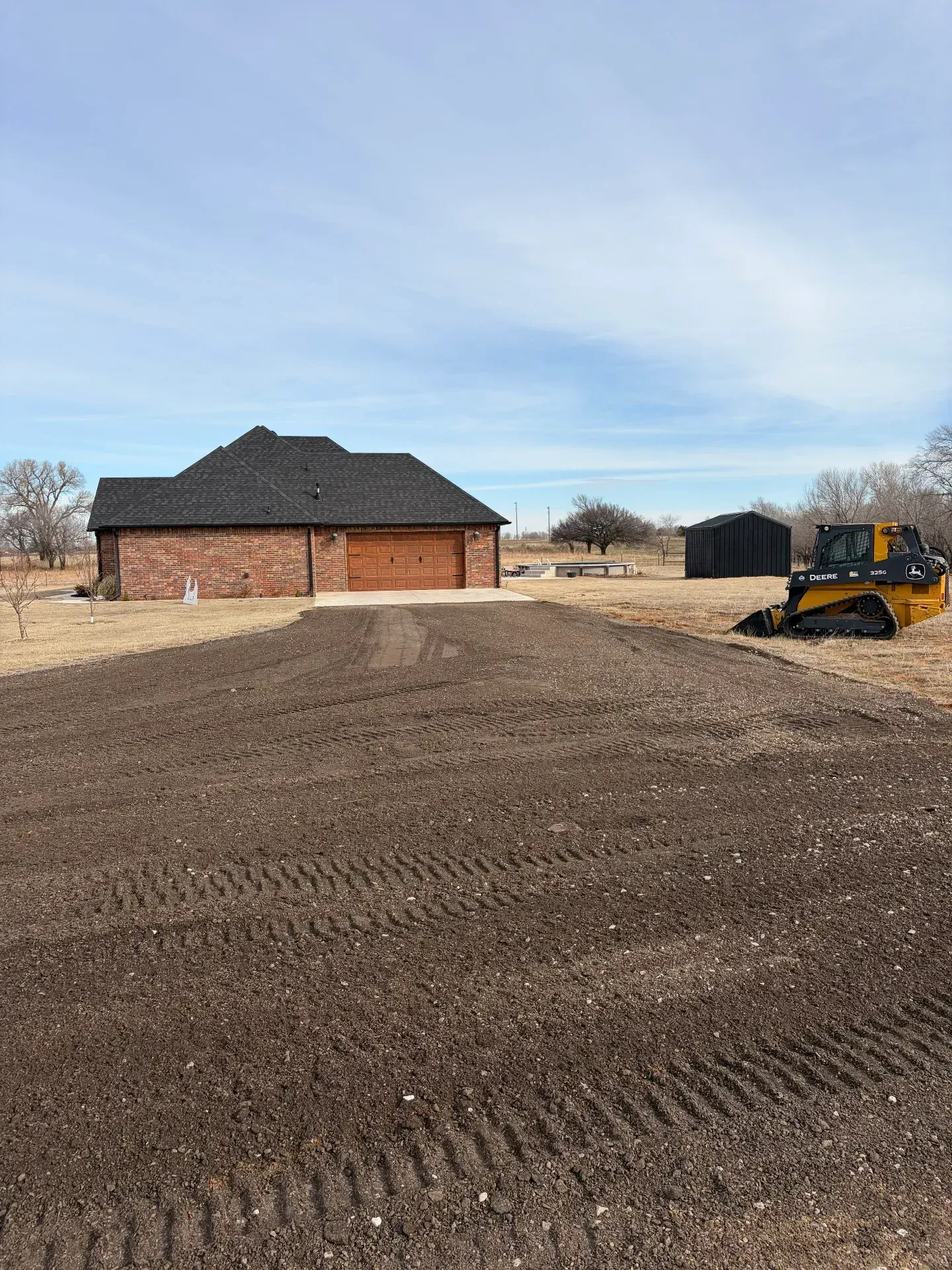
The crew clears the footprint first, then rough grades to the planned elevations with the dozer and excavator, leaving the surface shaped to drain away from where the building will sit. Fine grading is finished with the skid steers, smoothing the surface and bringing it to the exact elevation required for compaction. The grade is set before the pad is compacted, so the finished site is ready for the next trade without additional grading or stabilization work.
Arrange an on-site review to walk the footprint, discuss the planned grade, and receive an estimate based on the existing ground and the type of site preparation required.
How the Pad Is Shaped to Prevent Pooling and Settlement
Site preparation involves clearing the footprint, stripping topsoil, and cutting or filling to reach the planned grade. The dozer and excavator remove high spots and fill low areas, shaping the surface so runoff drains away from the building footprint and does not pool along the foundation or in low corners. The grade is checked against the design elevations before fine grading begins, so the pad matches the plan and supports the next phase of construction without settling or shifting.
After fine grading is finished, the pad is compacted in lifts, and the surface is firm enough to support equipment, materials and vehicle traffic without rutting or creating soft spots. The finished site drains properly, the building footprint is level, and the next trade can start work without waiting for additional grading or stabilization.
The crew is owner-operated with a dozer, excavator and two skid steers on site, plus a semi with belly dump for moving material on and off the site. The same equipment is used on residential building pads, commercial site prep, and agricultural construction sites.
Common Questions About This Service
Questions about site preparation typically focus on how the grade is set, what happens to the cleared material, and what the finished pad looks like before construction starts. The answers depend on the size of the footprint and the condition of the existing ground.
What is cleared before grading starts on a building site?
The crew clears brush, trees and debris from the building footprint, and topsoil is stripped and stockpiled for reuse during finish grading. The cleared footprint is marked based on the design plan, so the grading work stays within the agreed-on boundary.
How is the grade checked during rough grading and fine grading?
The grade is checked with a laser level or grade stick as the dozer and excavator cut and fill. Rough grading brings the surface to the general elevation and slope, and fine grading with the skid steers brings it to the exact elevation required for compaction and construction.
What happens if the site has more fill material than can be reused on the pad?
Excess fill material is hauled off with the semi and belly dump, or it can be spread in other areas of the property if the scope includes additional grading. The hauling is handled by the same crew, so there is no delay waiting for a third-party service.
Why is the pad compacted in lifts instead of all at once?
Compacting in lifts ensures that the fill material is stable throughout the depth of the pad, not just on the surface. Each lift is compacted before the next layer is added, so the finished pad does not settle or shift after construction starts.
How does site preparation on older homesites differ from preparation on undeveloped rural lots?
Older homesites often have buried debris, old foundations, or settled grade that needs to be excavated and removed before the new pad can be graded. Undeveloped rural lots typically have undisturbed ground, but the clearing and grading process is the same to ensure the pad is level, draining, and stable before construction begins.
HX2 Forestry Mulching & Land Clearing also performs land grading and site preparation in Duncan, Chickasha, Comanche, Wichita Falls and Lawton. The owner-operated crew brings its own dozer, excavator and skid steers to every site, handling jobs from single residential pads to multi-acre commercial and agricultural site prep. Call (580) 656-7096 to schedule an on-site review and receive an estimate based on your planned grade and existing site conditions.