Ponds That Hold Water Again
Pond Cleaning & Restoration in Waurika for silted-in stock ponds that no longer hold water as they should
A stock pond that once held enough water for a full season now empties by mid-summer, and what used to be six feet deep at the center is now a shallow basin choked with silt. HX2 Forestry Mulching & Land Clearing Oklahoma cleans out silted-in stock ponds and farm ponds across Waurika and Duncan, restoring them to working condition. The crew is owner-operated and runs its own excavator and dozer, so the same people who dig the silt out also restore the banks and outlet.
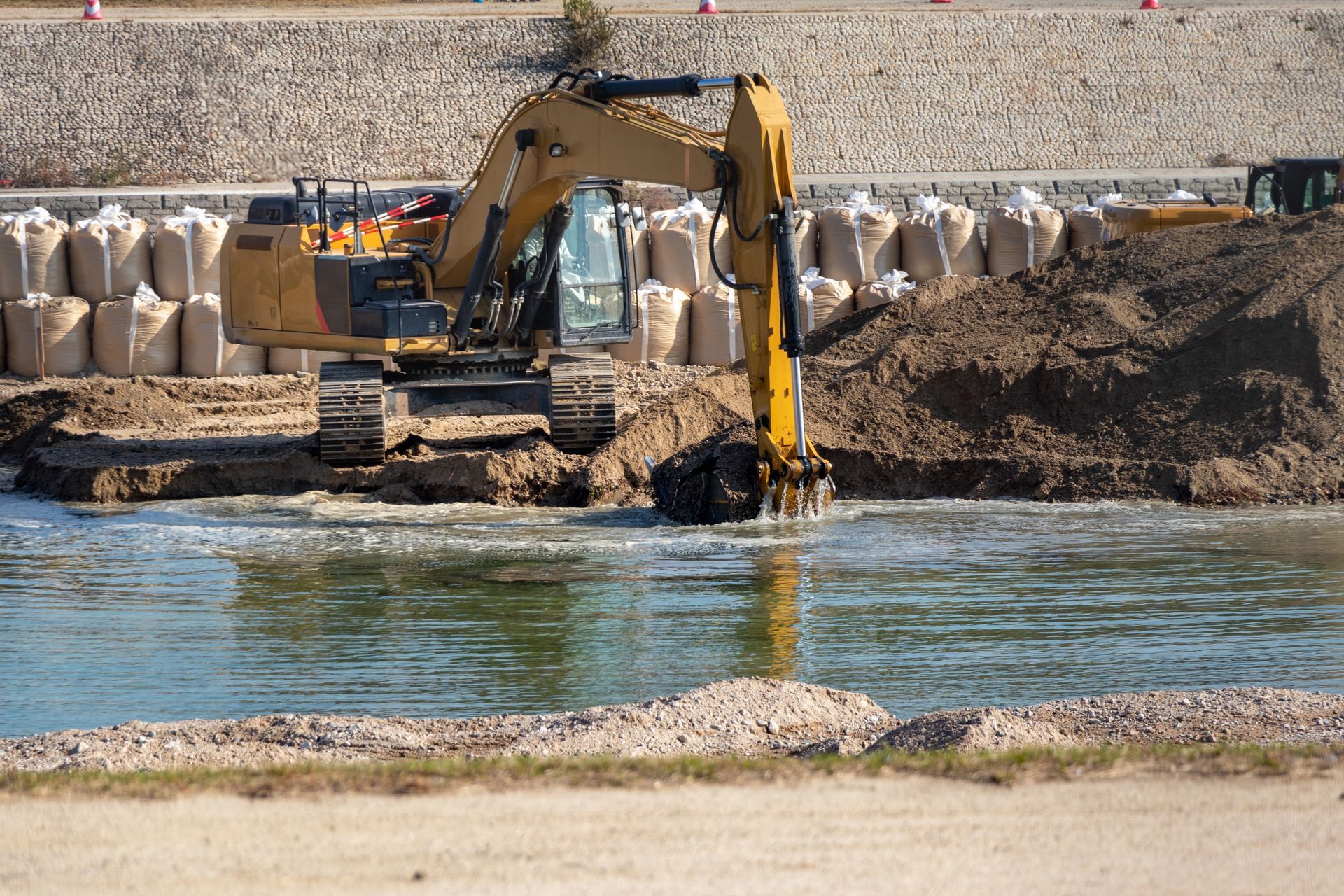
Many older rural homesites and acreage properties in this part of Oklahoma rely on a stock pond or farm pond for livestock water, and years of runoff from pasture and gravel access roads quietly fill them with silt until they hold far less water than they should. The excavator removes accumulated sediment from the basin, and the material is either spread on site or hauled off depending on volume and property layout. The dam and banks are reshaped where erosion or livestock traffic has worn them down, and the spillway is re-cut so overflow leaves the pond safely without cutting into the embankment.
Request an on-site evaluation to measure silt depth and confirm outlet condition before restoration begins.
How Pond Restoration Addresses Silt Accumulation
Restoring a silted pond starts with excavating the basin down to the original clay bottom, removing layers of sediment that have reduced depth and capacity over years of runoff. The excavator reaches the hardpan layer where water seals rather than drains, and the basin is widened if silt has encroached into what was once open water. The dam face and banks are regraded to stable slopes, and the spillway is re-established at the correct elevation and width to handle typical storm runoff.
After the work is complete, the pond refills to its original depth with the next significant rain, holding water through dry stretches instead of going dry by mid-season. The banks stabilize where livestock enter, and the spillway carries overflow without washing new gullies into the dam.
The service includes excavation of accumulated silt, reshaping the dam and banks, and re-cutting the spillway. Hauling silt off site or spreading it on the property is handled with the crew's own equipment, and seeding or rock armoring of disturbed areas may be added depending on site erosion and access.
Answers About How the Work Is Done
Property owners restoring an older pond often ask about the condition that triggers the work and what changes after the basin is cleaned out.
How do you know when a pond needs cleaning?
When the water level drops faster than it used to, when the center depth has decreased noticeably over several years, or when the pond no longer refills to its original capacity after heavy rain, silt has likely filled a significant portion of the basin.
What does the excavator remove during cleaning?
The excavator digs down through layers of sediment that have washed in from surrounding pasture and access roads, reaching the original clay bottom where the pond was first built, and silt is either spread on site or loaded into the belly dump trailer for removal.
Why do ponds in this area silt in over time?
Runoff from open pasture and gravel roads carries fine soil particles into the pond with every rain event, and without upstream sediment control or vegetated buffers, those particles settle in the basin and accumulate faster than evaporation can concentrate them.
What happens to the dam and banks during restoration?
Banks worn down by livestock traffic or wave action are reshaped to stable slopes, the dam face is regraded if erosion has thinned it, and the spillway is re-cut to the elevation and width that handles overflow without threatening the embankment.
What will you notice once the pond is restored?
The basin refills to its original depth after rain and holds water through dry periods, livestock can access the water without the banks collapsing, and the spillway channels overflow safely without cutting new gullies into the dam.
HX2 Forestry Mulching & Land Clearing Oklahoma also cleans and restores ponds in Duncan, Chickasha, Comanche, Wichita Falls, and Lawton. Pond cleaning is one of the crew's most frequent recent jobs, performed with the owner's own excavator, dozer, skid steers, and semi with belly dump trailer for silt removal and material hauling.