Material Delivered and Spread on Site
Rock & Dirt Hauling in Waurika for pond builds, house pads and gravel drives on rural acreage
Pond builds, house pads and gravel drives on rural acreage in this part of Oklahoma all need fill and base material brought in from a quarry or pit, and hauling distance and load count often decide what the whole project costs. HX2 Forestry Mulching & Land Clearing hauls rock and dirt with its own semi and belly dump trailer for jobs across Waurika and surrounding rural properties. Because the same crew runs the dozer and excavator, material is loaded, hauled and spread without bringing in a separate trucking company.
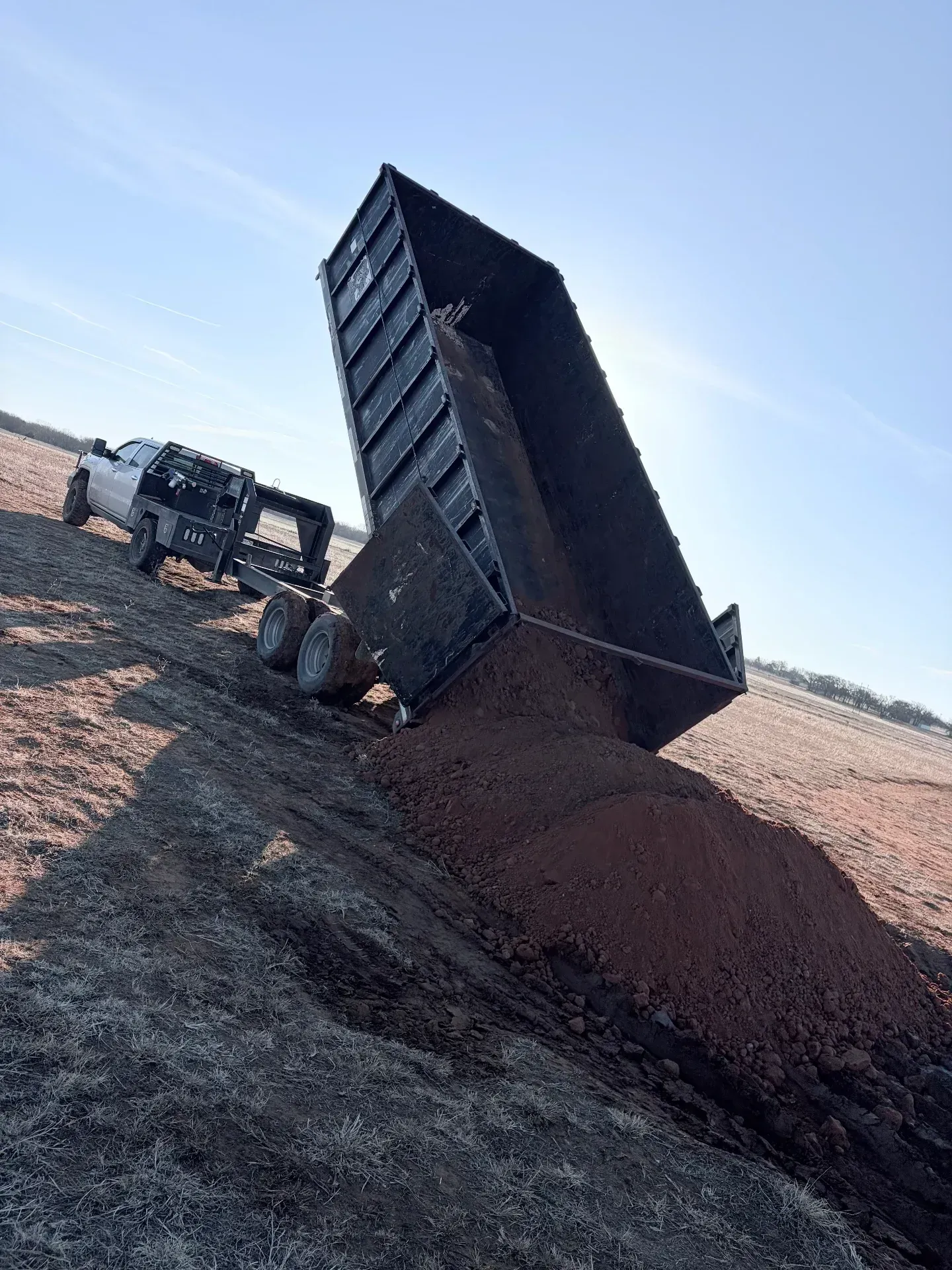
Material is loaded at the source by the crew's own equipment or by the supplier, hauled in belly dump loads, and dumped at the site where the dozer or skid steer spreads and compacts it. Load count and haul distance set the price, so understanding how much material you need and where it comes from helps you evaluate quotes accurately. Confirm whether the quote covers the material itself or only the hauling, since suppliers often bill separately for the rock or dirt.
Schedule a site consultation to determine load count and material type for your build.
How Equipment Coordination Reduces Project Delays
The same crew that hauls the material operates the dozer, excavator and skid steers that place it, which means trucking and dirt work are coordinated without waiting on separate contractors. Material arrives when the site is ready to receive it, and spreading starts as soon as the load is dumped. This approach works particularly well for pond builds and house pads where grading must happen in stages as fill is added.
Once material is hauled and spread, you notice a level, compacted surface ready for the next phase of construction or immediate use as a gravel drive. The belly dump trailer allows precise placement, so material goes where it is needed rather than in piles that require additional handling. On jobs where multiple loads are required, the crew stages deliveries to match the pace of grading and compaction.
For rural acreage projects, hauling from the nearest suitable quarry or pit reduces cost while still providing the base material specification required for your application. The crew evaluates haul distance and access during the site visit and confirms load size based on trailer capacity.
Questions Before Starting Your Hauling Project
Property owners planning dirt work or gravel installation often want to know how hauling fits into the overall job and what determines the final count.
How is material loaded at the quarry or pit?
Material is loaded by the crew's own equipment or by the supplier depending on site access and equipment availability, then transported in belly dump loads that are sized to match trailer capacity and road conditions.
What determines how many loads a project requires?
Load count depends on the volume of material needed for the pad, pond or drive, the capacity of the belly dump trailer, and how the material compacts once spread and graded on site.
How is rock or dirt spread once it arrives?
The dozer or skid steer spreads and compacts material immediately after it is dumped, so each load is graded into place before the next one arrives, which keeps the site level and avoids large stockpiles.
What should you confirm before hauling starts?
Confirm whether the quote covers only hauling or includes the material itself, since quarries and pits often bill separately, and verify the haul distance since longer routes add cost per load.
How does hauling work on rural properties with limited access?
The crew evaluates gate width, road condition and turnaround space during the site visit to confirm the semi and trailer can reach the build area without damaging fence lines or pasture.
HX2 Forestry Mulching & Land Clearing also hauls rock and dirt in Duncan, Chickasha, Comanche, Wichita Falls and Lawton. Contact HX2 Forestry Mulching & Land Clearing at (580) 656-7096 to arrange a site evaluation and load estimate based on your project scope.